

Top Essentials For A Day Hike + Printable Checklist
This post may contain affiliate links, which means I may receive commissions when you click links and make purchases at no extra cost to you. View details here. By purchasing items through the included links, you’ll help keep this site running. Thank you for your support!
I love the great outdoors! Hiking in remote areas can be so relaxing and rewarding. I often hike solo, even though it is not recommended for safety. I hike solo because the alternative is not going at all. I am an experienced hiker who always does thorough research on a trail before attempting it. I come prepared with GPS, essential items, a game plan, and a time frame to complete the trail. I only hike in good conditions and have never had a complete hiking fail- although I have gotten lost (even with GPS) and ran out of water on a few occasions.
Your gear list is the most important thing to master before a hike. A hiking packing list varies depending on the weather, the type of hike, and the length of the trip, but the one thing all hiking packing lists should have in common is the 10 hiking essentials. These are the most important items for your day pack for short-day hikes or long-distance hikes. You’ll need to bring a different level of each hiking essential with you, depending on the type and length of hike you are doing.

The 10 Hiking Essentials was a list created in the 1930s by professional mountaineers and outdoor adventurers. Although the list has evolved over time, it is still widely used to help hikers and backpackers prepare for outdoor activities.
The 10 hiking essentials include:
- Plenty of water for hydration
- Food and snacks for energy replenishment
- Extra layers for changing weather
- Sun protection
- Navigation device
- First-aid kit
- Fire starter
- Headlamp for illumination in the dark
- A knife or multi-purpose tool
- Emergency shelter
I’ll be the first to admit I do not bring all 10 essentials on everyday hikes. If it is a short day hike, I skip fire and emergency shelter and only bring a headlamp if I will be hiking in the dark. I never used to bring a knife or multi-purpose tool, but I realize it is great to have for fixing gear, eating food, and other unexpected things that may come up.
Additional essentials not included in the official 10 include a good backpack, appropriate footwear, bathroom wipes, a water filter, a small towel (to wipe hands or wet rocks off before sitting), and a camera. Sometimes, I’ll just use my phone, but I never go on a day hike without my camera (and extra batteries). If I am solo, I also bring my favorite travel tripod.
Before hiking, make sure to check the weather conditions, download an offline map and be sure to pack enough water and food for the length of the hike. A good rule of thumb is to bring 1 liter of water for every 1 hour of hiking. Most hikers average 2-3 miles per hour. But you will have to take the heat, humidity, and terrain into account before settling on an amount of water. One of the longest day hikes I have done is Lago de Sorapis in the Dolomites. It was a gorgeous hike with some rough inclines and tricky downhill sections. I ran out of water with close to three miles left, but the hike ended up taking me at least 2 hours longer than I anticipated. So it is best to bring extra water and snacks just in case, especially if it is a trail you have never done before.
Day Hike Packing List for All-Weather
These are the top hiking essentials you should pack for all-day hikes regardless of weather. For overnight hikes, you will need a more specialty backpacking checklist with sleeping gear, cooking essentials, and other safety gear.
Day Hike Essentials:
Sturdy hiking shoes or trail runners: One thing is for sure, a waterproof shoe is a must. They now make waterproof tennis shoes but I still opt for my Danner hiking boots, Columbia Newton Ridge or Sorel Emelie Lace up Boots for less demanding hikes.
Hiking backpack with a hydration pack or water bottle – Osprey Sportlite Pack with Water Bladder is my go-to for most hiking trails. The integrated hydration pack makes drinking and carrying water a lot easier than bringing multiple water bottles.
Toilet paper or eco wipes- Just in case you can’t hold it!
Lightweight rain jacket- The weather can change in an instant. A lightweight jacket like this one is perfect to protect from the elements.
Cell phone with downloaded offline maps- I always use AllTrails to download an offline map so I can track my moments along the trail. It’s been a lifesaver on trails that are poorly marked.
Portable battery charger- you do not want to have a dead phone before your hike is over especially if you are using All Trails for GPS
Spf lip balm + sun protection– I usually hike in long sleeves regardless of the temperature to protect against mosquitos, and the sun. These lightweight tops offer enough protection without being too heavy.
Bear Spray for bear safety– A must if you are hiking in bear country, which is most of North America. Black bears are found all over the USA while Grizzly’s are found in Canada, Alaska and states such as Wyoming, Montana, Idaho and Washington. Be careful and fully alert when hiking in Alaska and in parks including Glacier National Park, Yellowstone, Grand Tetons, and the Great Smoky Mountains (high population of Black Bears).
Basic first aid kit- you never know when something might happen on the trail. I would make sure to have some sterile gauze, tape, emergency tourniquets, antiseptic wipes, antibacterial ointment, Ibuprofen, blister band-aids
Plastic bag to pack out waste- any kind of lightweight and zipper-friendly bag for packing out bathroom wipes, food packaging, or anything else that you should not leave behind.
Food or snacks like granola bars or trail mix- Items that do not need to be refrigerated and still taste good even if they get squished.
Non-essentials for all Hikes
- Trekking poles- best for stability during water crossings, uneven terrain and steep accents and scents. Not useful for rock scrambles
- Air Horn– consider bringing one of these as another safety measure while hiking.
- End-of-day shoes- I always love changing into my Birkenstocks after a long day hike! My feet love to breathe.
- Backpack rain cover
- Hand sanitizer
- Camera gear + extra batteries
- Insect repellent
Additional Items for Warm Weather Hiking
With warmer weather, it is important to stay hydrated and use sun protection. In really hot temperatures start hiking early in the morning to avoid the hottest time of day. Always avoid hiking in scorching temperatures, but above all, always stay hydrated!
- Lightweight long sleeves for sun protection
- Extra water for challenging hikes
- Wide-brimmed hat to protect neck, ears, and chest
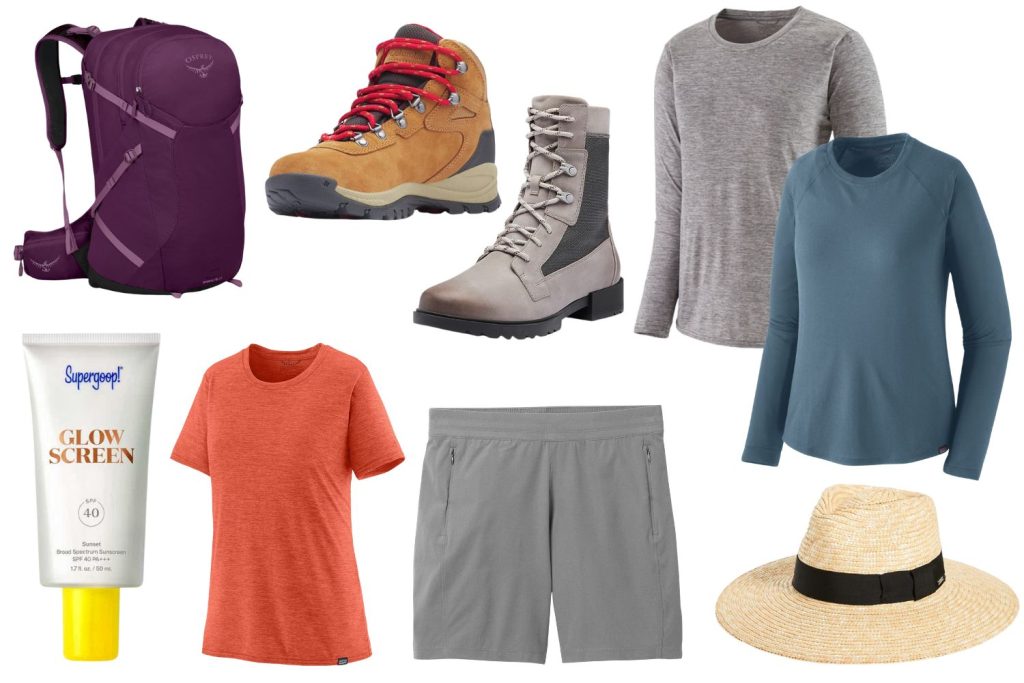
Favorite Warm Weather Hiking Apparel
Tops
I love Patagonia’s Capilene Cool Daily Shirts for hot weather. They come in sleeveless, short-sleeve, and long-sleeve options. They are made of a soft polyester blend that dries fast and wicks moisture as you sweat.
Bottoms
On hot days, I love comfortable and breathable shorts like KÜHL Haven Short or Freeflex Short. Both are soft, lightweight, stretchy, and durable. Made of quick dry fabric perfect for hot weather hikes. Their shorts come in multiple inseams from 3.5″ to 11″, and they also offer skirts and skorts perfect for staying comfortable in warm weather.
Socks
Darn Tough socks are my hiking go-to for hot or cold weather. They come in different thicknesses for various weather conditions and different lengths, including crew and ankle length.
Items for Cold Weather Hiking
You will want to wear layers for cold-weather hiking. It is important to wear base layers made of merino wool or synthetic materials. Cotton absorbs sweat, and the cold weather will turn the moisture into ice against your skin, making you colder while hiking.
- Gloves
- Wool Beanie
- Wool socks
- Instant hand warmers-I always bring Hot Hands with me on cold hiking days. They last all day and are the best at keeping my hands warm.
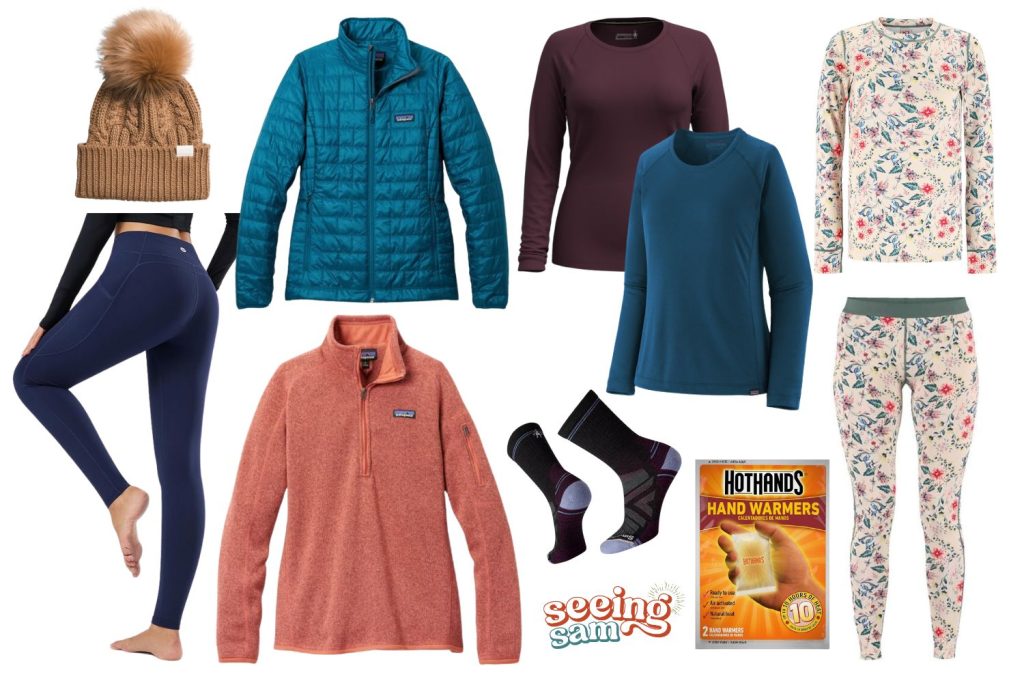
Favorite Cold Weather Hiking Apparel
Base Layers
I love a Merino wool base layer for freezing temperatures. Smart Wool has many thermal options. If the weather is above freezing, I usually go for a synthetic blend base layer. I love the designs and colors of Kari Traa (they also have merino wool options).
Mid Weight Tops
Depending on the temperature, I sometimes just use a base layer and an outer puffer jacket. But in extreme freezing temperatures, I love this Patagonia Better Sweater Fleece Jacket to layer between. It comes in many colors and a few different styles. The Patagonia Nano Puff or a down puffer vest are also great mid-weight layering pieces.
Bottoms
Fleece bottoms are my go-to in freezing temperatures. I love a pair with pockets and have bought expensive fleece leggings and cheaper ones on Amazon, and the cheaper ones keep me just as warm!
Outer Layers
A puffer jacket is the best outer layer for hiking. It is lightweight, windproof, can easily be compressed, and keeps you so warm! Down-filled puffers are the warmest, but synthetic-filled puffers are also warm. I have both Nano Puff and a Down Filled Sweater from Patagonia and trade them out depending on the temperature. When hiking, I stay warm, so the Nano Puff with a wool base layer is usually all I need.
Socks
Wool socks and wool synthetic blends always keep my feet dryer and warmer than cotton socks. Having good socks is important to prevent blisters. Socks with odor control and moisture-wicking properties are great for hiking. I prefer a mid-weight winter sock so my foot is not as tight in my shoe.
Hand Warmers
When it’s below freezing, these are a must! I put them in my jacket pockets and also in my backpack to keep my camera gear warm and help batteries stay full.
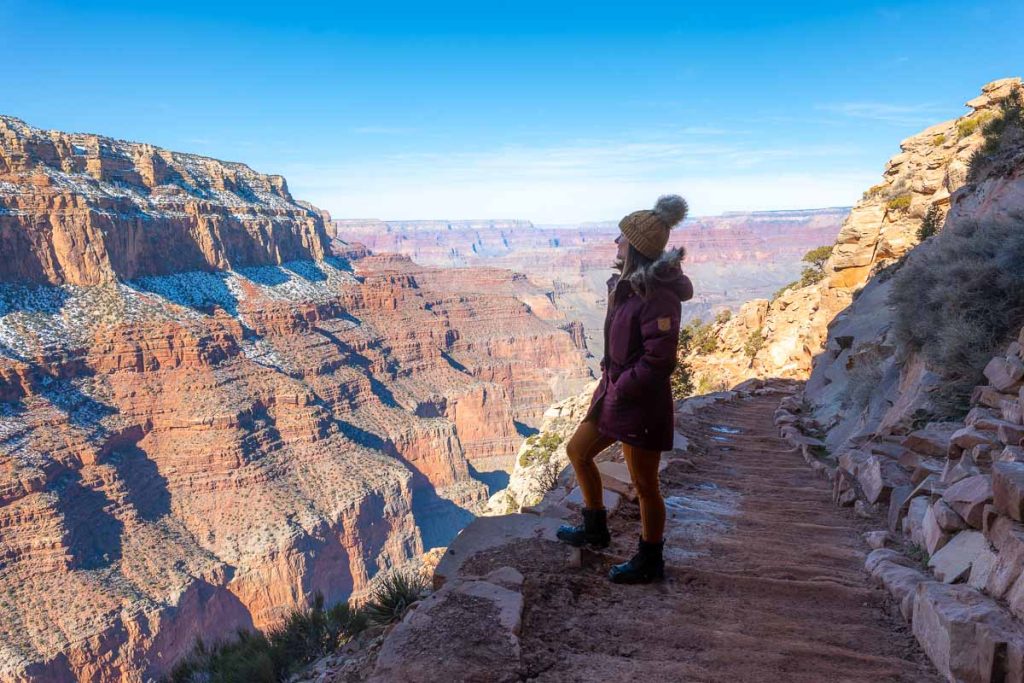
Essentials for Long Hikes:
For long-distance hikes, there are a few more items that make sense.
- Emergency shelter
- Water filter
- Firestarter
- Pocket Knife
- Duck Tape
- Hydration packs
- Sleeping bag + mat (overnight hikes)
- Extra pair of socks
These are items that a standard day hiker or beginner hiker won’t need on a short hike but are great to keep in mind for a long-distance hike or a hike in the backcountry where overnight and survival gear are needed.
***
Prepare yourself for the great outdoors before every hike! Whether it is a new trail or not, it is important to be prepared. Bring a reliable GPS, wear weather-appropriate clothing, and bring plenty of food, water, and emergency essentials just in case. If you are not prepared as a hiker, you can put others at risk. Out Alive is a podcast I have listened to that has really opened my eyes to all the dangers you could face in nature- ever if you are prepared!
On your next hike, make sure to follow the leave no trace principles, be smart, and enjoy mother nature!
Shop Travel Gear
Shop all my current obsessions and travel essentials I can’t live without. I only recommend products I’ve actually tried and loved!

The Best Travel Apps
Want To Travel Easier?
Get my Free Guide to the Best Travel Apps straight to your inbox


